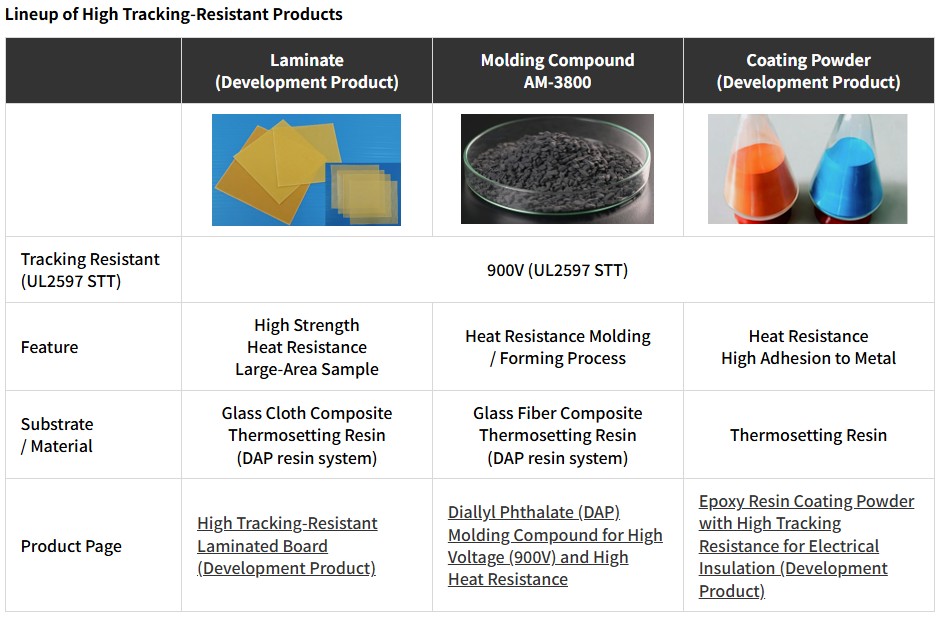
Sumitomo Bakelite has developed a High Tracking-Resistant Laminated Board (900V)
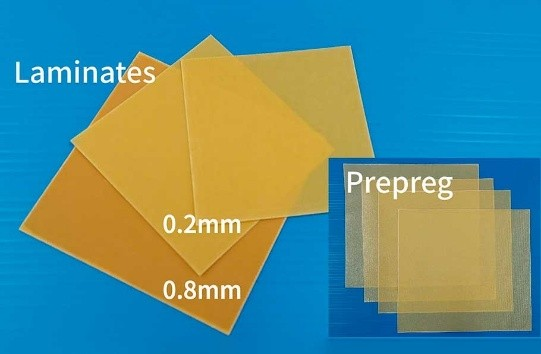
June 12, 2026 - Sumitomo Bakelite Co., Ltd. (Headquarters: Shinagawa-ku, Tokyo; President and Representative Director: Shinichi Kajiya) has developed a prepreg and laminated board with excellent tracking resistance and insulation properties using diallyl phthalate (DAP) resin. This new product boasts a tracking resistance of 900V, high dielectric breakdown strength, reliable insulation performance, high strength achieved through the incorporation of glass cloth, and heat resistance due to the thermosetting resin. These features make it a valuable contribution to insulation components and structural materials used in high-voltage applications, such as xEVs, industrial power supplies, and electronic devices.
Background of Development
They have been providing phenolic resin laminated boards and epoxy resin laminated boards to the market for years. Leveraging the formulation technologies cultivated through these products, they are actively engaged in the development of new materials and high-value-added products beyond their existing offerings.
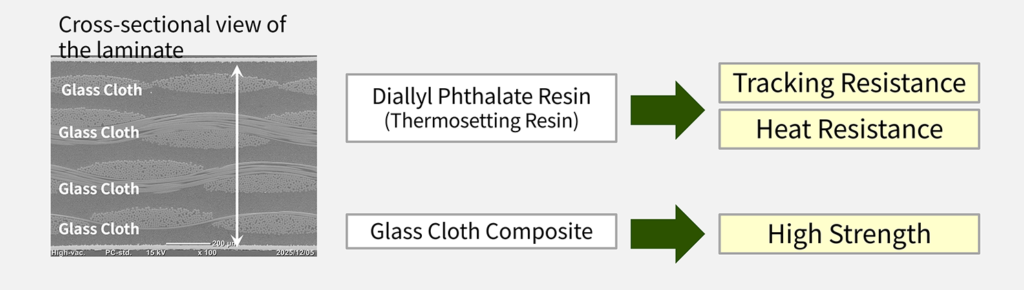
In response to the global trend toward higher voltage applications, they have developed a material that combines high insulation, excellent tracking resistance, and heat resistance using the thermosetting resin diallyl phthalate (DAP). By integrating it with glass cloth, this laminated board material also features high strength.
Product Features
This laminated board has demonstrated a tracking resistance of 900V according to the UL2597 STT test*1 (see Table 1 below). It also exhibits high dielectric breakdown strength and high modulus of elasticity under heat. Beyond its excellent tracking resistance, it delivers exceptional insulation properties, heat resistance, and superior strength.
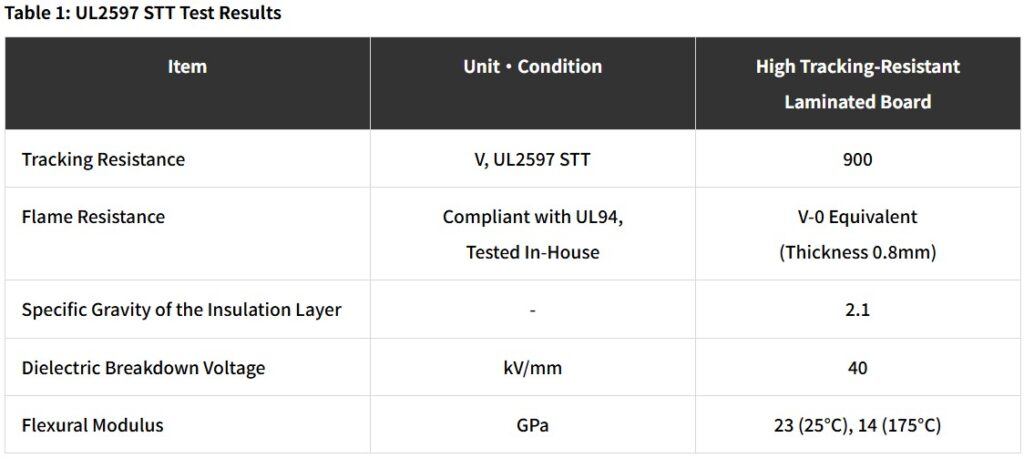
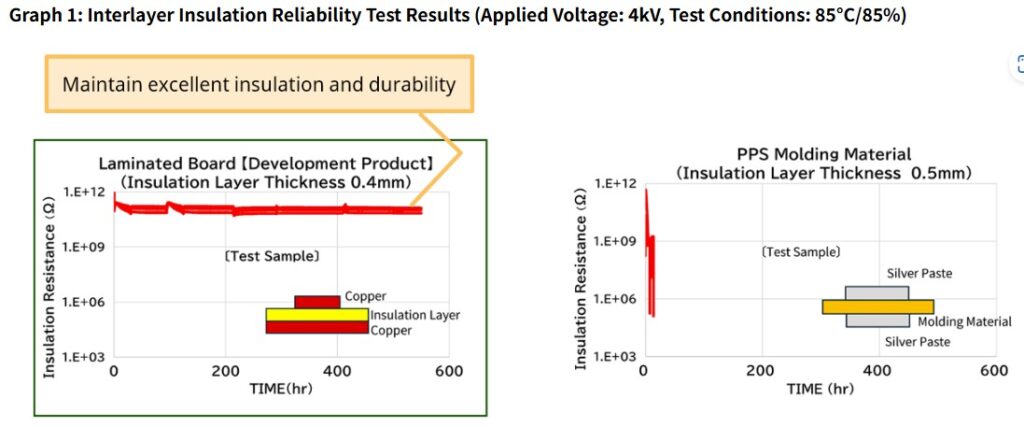
Furthermore, this product demonstrates excellent insulation properties and durability even in high-voltage environments, enabling the thinning of insulation materials2 and the reduction of distances between conductors3. These features contribute to the miniaturization, slimming, and improved efficiency of electrical components (refer to Graph 1 below).
*1 Under the conventional tracking test standard based on IEC 60112 (Comparative Tracking Index Test), the maximum test voltage was limited to 600V. However, with increasing demands for higher electrical performance of materials, the new standard UL 2597 (Surface Tracking Test), established by UL Standards & Engagement, enables testing at voltages of up to 900V.
*2 Materials with lower insulation properties require greater thickness to ensure sufficient insulation, whereas materials with higher insulation properties can achieve thinner layers.
*3 Materials with low tracking resistance (durability) may lead to conduction or short circuits when the distance between conductors is reduced. However, using materials with excellent tracking resistance allows for shorter distances between conductors while still maintaining reliable insulation.
Future Plans
Moving forward, they will proceed with sample evaluations. Additionally, they will collaborate with their other high tracking-resistant products, such as molding materials and powder coatings, to offer tailored proposals that meet the specific usage requirements and needs of their customers.