
More Data, More Demands: How Coding Must Evolve for the 2D Era - LEIBINGER at PACK EXPO International 2026
Chicago, Illinois, September 29, 2026 – At PACK EXPO International 2026, from October 18–21 at McCormick Place in Chicago, LEIBINGER will put the production realities behind the 2D transition in focus – with the Americas debut of the 2DJET product concept, live IQJET demonstrations and two Innovation Stage sessions addressing code performance and the hidden operating costs of conventional CIJ.
Packaging manufacturers are facing increasing pressure: More SKUs and formats, growing traceability requirements, and workforce constraints are converging with the need to maintain high productivity while keeping operational complexity under control. Recent PMMI data highlights the relevance of these challenges: 70% of respondents identify productivity as their top operational priority, while 52% rank regulations, traceability and track-and-trace among upcoming operational uncertainties.
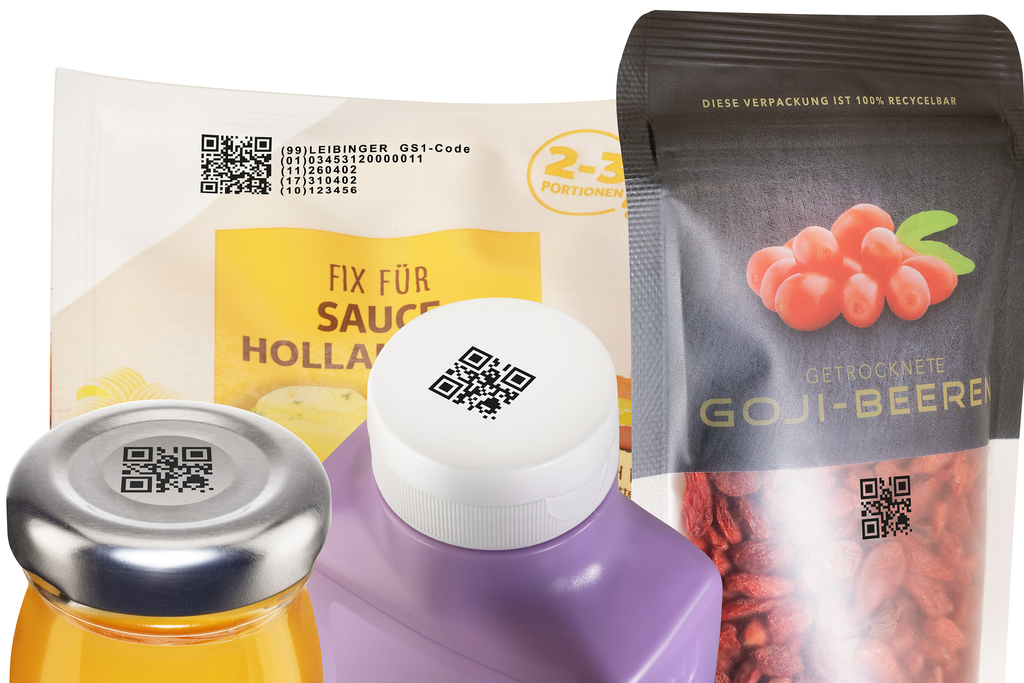
For industrial coding and marking, this shift is particularly evident in the transition to 2D codes. At PACK EXPO International 2026, LEIBINGER will present the 2DJET product concept for the first time in the Americas at Booth S-3491 and demonstrate the IQJET live – focusing on two key requirements: more capable codes and less operator intervention in production.
With its “Ambition 2027,” also known as GS1 Sunrise 2027, GS1 aims for retail point-of-sale systems worldwide to be capable of processing GS1-standardized 2D codes by the end of 2027. These codes can carry significantly more information than traditional barcodes. For manufacturers, however, the challenge lies in production: the codes must be printed reliably at high speeds across different materials and packaging geometries. At the same time, the transition to 2D codes should be as straightforward as possible, without requiring major modifications to existing production lines.
This is exactly the challenge LEIBINGER developed 2DJET to address. The new coding technology produces high-resolution, GS1-compliant 2D codes at up to 300 dpi and production speeds of up to 120 m/min. Code quality is verified according to ISO/IEC 15415. Its contactless printing concept and throw distance of up to 8 mm provide flexibility across films, plastics, cartons, coated materials and different package geometries, while the compact printhead supports integration where space or product movement can make installation challenging. A continuous ink supply concept and cartridge replacement during operation are designed to keep production running without stopping the line for routine consumable changes. The commercial launch of 2DJET is planned for 2027. PACK EXPO will be the first opportunity for manufacturers in the Americas to experience the technology concept.
Beyond the booth, LEIBINGER will also spotlight 2D codes at PACK EXPO: On October 19 at 1:00 p.m., LEIBINGER and GS1 will explore the practical challenges of industrial 2D coding in the presentation “The Missing Link in Industrial 2D Coding” at Innovation Stage 2 (N-4580).
Productivity is also about what operators no longer have to do
Given workforce constraints and limited staffing resources in the packaging industry, the amount of attention machinery and equipment require during ongoing operation is becoming increasingly important. Cleaning routines, maintenance, consumable changes or start-up issues can take up valuable operator time. At a live station, featuring multiple IQJET printers, visitors at the LEIBINGER booth can experience what CIJ coding with less operator intervention looks like in practice.
With standard dye-based inks, IQJET has a scheduled maintenance interval of up to five years or 20,000 operating hours. During production stops, LEIBINGER’s automatic nozzle sealing closes the system airtight. This prevents ink from drying in the printhead and enables the printer to restart without routine printhead cleaning before production.
Consumable cartridges can also be replaced while the printer is operating, avoiding a print interruption for cartridge changes. IQJET additionally uses up to 50% less solvent than conventional CIJ systems, while multiple industrial interfaces including OPC UA support integration into automated production environments.
The individual technologies address different tasks, but their impact is connected: fewer routine interventions, more predictable maintenance and lower consumable requirements help protect productive time and make operating costs easier to plan.
For manufacturers evaluating CIJ technology, this shifts the conversation from the purchase price of the printer toward a broader question: What does coding require from the production team over years of operation?
Putting the hidden cost of CIJ on stage
LEIBINGER partner ID Technology, a ProMach brand, will also address these aspects at PACK EXPO. In the presentation “Hidden Costs of Traditional CIJ Printing,” ID Technology will explore how maintenance, operator intervention and production interruptions affect the true operating costs of CIJ coding on October 19 at 2:30 p.m. at Innovation Stage 3 (N-4585). In addition, the ID Technology team will be available at Booth S-3530 to discuss efficient and reliable coding processes and the integration of coding solutions into existing production lines.
Meet LEIBINGER at PACK EXPO International 2026
The LEIBINGER team looks forward to connecting with visitors and discussing the requirements that will shape the future of production and the topics that matter most to them. One opportunity to continue the conversation will be the Oktoberfest Happy Hour at Booth S-3491 on October 18, 19 and 20 from 3:00 to 5:00 p.m., with German beer, on October 20 from 1-5pm with warm German pretzels.